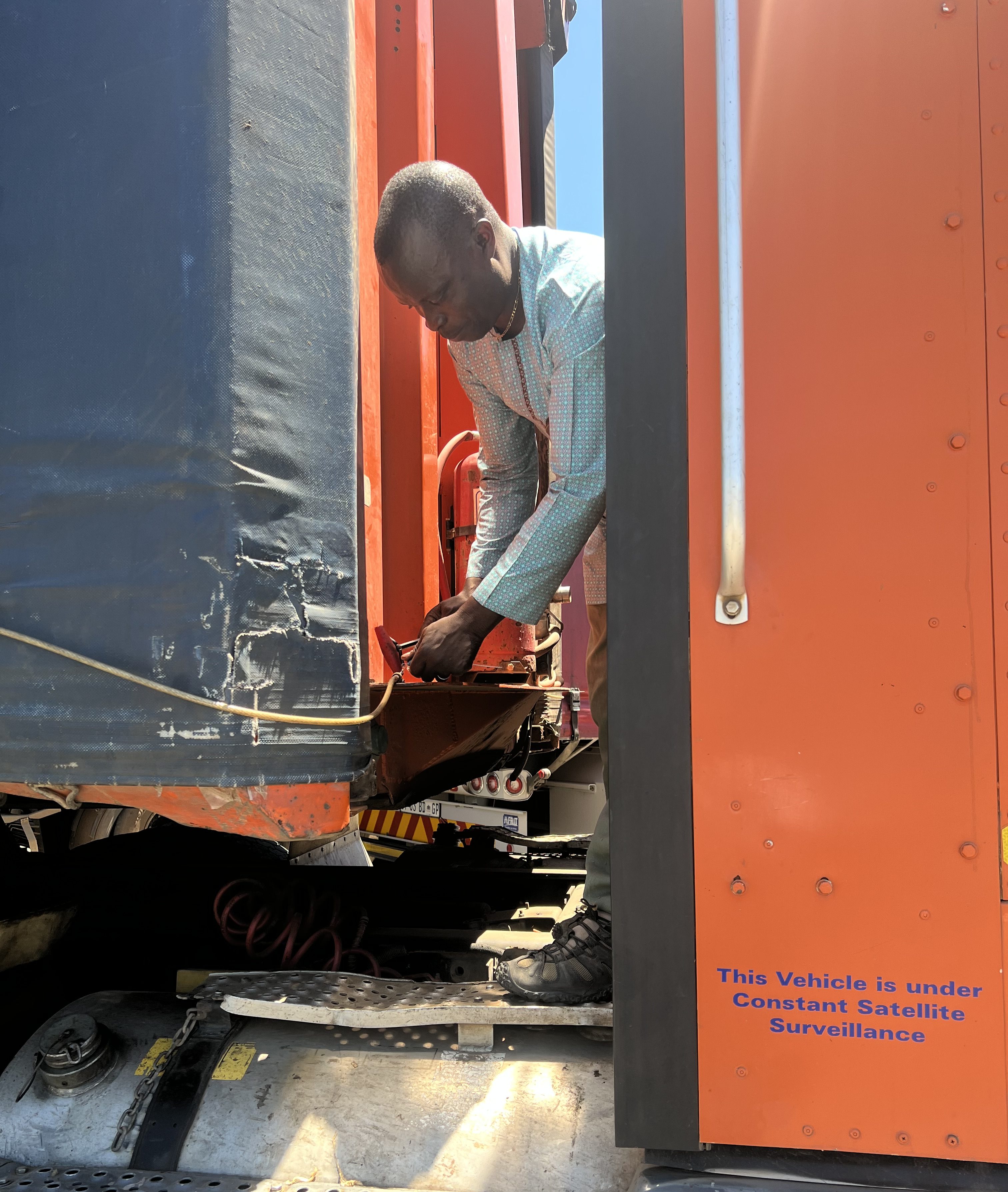
My second book project, Following the White Line: Mobility as Life and Work in Southern Africa examines the experience of being a regional person in southern Africa through cross-border trucking. This mobile and visual project documents and analyzes the experiences of cross border truckers as they haul goods and commodities along the North South Trade Corridor from port to truckyard, through checkpoints and across borders. The project includes a web-based visual narrative of the varied geographies, chokepoints, infrastructures, technologies, and social intimacies made and encountered by these figures who have seemingly unlimited mobility. Cross-border truck drivers spend most of their working lives on the road, collecting passport stamps, courier’s licenses and 30-day visas, hauling goods and commodities from which they are neither entirely alienated nor have the conditions to enjoy. They are at once couriers embedded within trade geographies and networks of connectivity and social person with a particular experience of class, transnationalism and work, and they have different possibilities and experiences of kinship and home. Following the White Line refers both to the experience of traversing the region’s trade geographies and to research method.

